
Quiet, ethical, close-range encounters in the Northern Cape bushveld
Pull the door gently closed, let your eyes adjust, and listen. A francolin calls somewhere in the camelthorn. Dust hangs gold in the first light. Out in the red-sand clearing, a warthog pair materialises, snouting at the pan, then an impala ram steps from the shadows, head high. At Loskop Farm our purpose-built bow hides were designed for moments like this—calm, controlled, close. If you love the stillness of a hide sit and the discipline of the bow, this is Africa at its most intimate.
Where you’ll hunt: the Loskop landscape
Loskop Farm lies in classic Northern Cape thornveld—camelthorn and shepherd’s trees over red Kalahari sands, interspersed with open clearings, gently worked pans, and natural game paths. The terrain offers superb concealment and reliable animal movement between bedding, feeding and water. Our hides are placed where wind, background, shade and line of travel all work for the bowhunter:
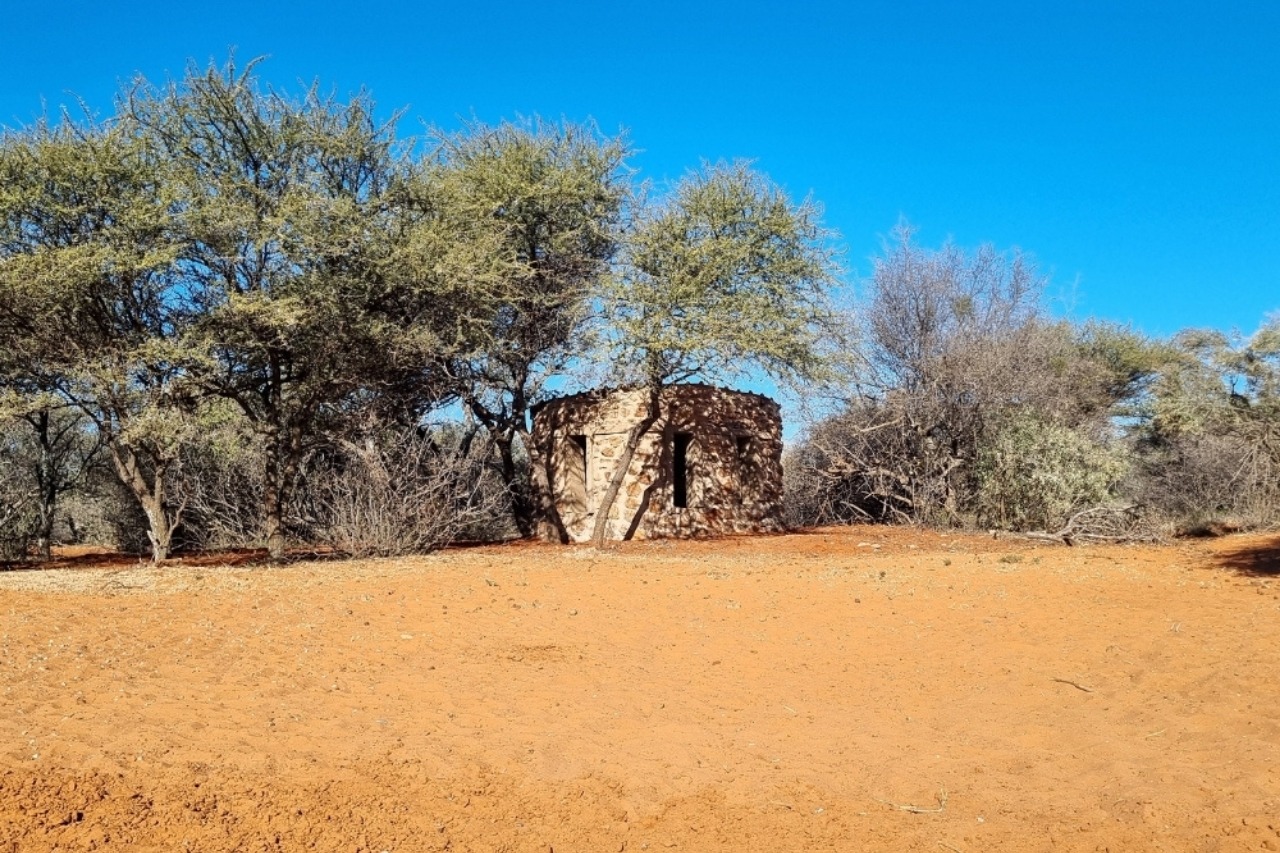
- Stone Circle Hide – A low, circular stone blind beside a natural game path to water. The curved wall breaks wind eddies, and the vertical slots give clean sightlines with minimal silhouette.
- Acacia Edge Hide – Tucked under camelthorn canopy at the margin of an open clearing. It’s a classic background for drawing unseen, with trimmed lanes at 20–28 metres.
- Red-Earth Pan Hide – Overlooking a shallow pan frequented by warthog, blue wildebeest and blesbok in dry weather; reliable late-afternoon action.
- Bush Corridor Hide – Set in a narrow movement corridor between feeding patches; perfect for short, controlled shots at relaxed animals.
Each position has been tested for morning and afternoon shade, prevailing winds, and quiet approach/exit routes so you can slip in and out without lifting heads.

Built for bows: what makes these hides different
A rifle hide and a bow hide are not the same thing. We built these blinds from the ground up for archery:
- Low stone profiles blend into the bushveld and muffle sound.
- Quiet door furniture and felted internal touch-points cut micro-noise when you shift or reach for the rangefinder.
- Vertical window slots keep the bow limb path clear, reduce your outline, and frame high-percentage angles.
- Crushed-earth floors help with scent, reduce dust, and keep footsteps silent.
- Shot lanes trimmed and staked at 15, 20, 25 and 30 metres (small, natural range markers) so you can pre-range and settle.
- Shade orientation prevents sun flare on your peep and minimises heat shimmer in the last hour.
- Airflow & scent—windows can be cracked for a gentle cross-breeze; most hides favour a SE–SW wind, but we allocate daily according to conditions.
- Ergonomics—quiet stools, bow hooks, and shelf space for releases, binos, snacks and a soft case.
We keep ethical distance limits by design: lanes are set for close shots, and we coach for patience. Quartering-away opportunities are the goal; hard quartering-to or straight-on angles are passed up, full stop.
Species & typical shot scenarios
The hides are positioned for high-probability encounters with classic plains game:
- Impala – Alert, fast-twitch animals; expect short feeding windows. Present broadside/quartering-away shots between 18–25 m.
- Warthog – Unhurried if undisturbed; wait for the near-side leg forward to open the pocket. Typical shots 15–22 m.
- Blue Wildebeest – Tough and big-boned; best taken quartering-away with heavier arrows. Expect 22–30 m lanes.
- Blesbok – Often in small herds; patience for the right lane is key to avoid pass-through contact.
- Occasional kudu – Bulls and cows drift through at first light on calm days; take only clear, unhurried angles.
We don’t publish “success rates”—they’re largely a function of shot selection and discipline—but you can expect consistent opportunity in season with quiet sits, good wind and ethical patience.
Seasons, weather & daily rhythm
- Dry months (May–September) concentrate movement to water and pans; cool mornings mean comfortable long sits and crisp sight pictures.
- Green months (November–March) spread animals out with abundant browse; activity peaks early and late, with midday shade feeding on warm, overcast days.
- Wind is typically light at dawn and builds through late morning; we set hides accordingly and may shift you after brunch if the breeze turns.
- A typical bow day
- 04:30–05:00: Coffee and briefing; final check on wind, hide, and species focus.
- Pre-dawn approach: Led by your PH/guide on a quiet path; slip in before first birds.
- Morning sit: 3–4 hours; snacks and water in the hide.
- Midday: Brunch and rest, practice on the range, or optional hide swap.
- Afternoon sit: Back in by 14:30–15:00 for the golden window to dusk.
- Follow-up: If an arrow is loosed, we start timed, methodical tracking with your PH and tracker. We move slow and smart.
Proven bow setups (and why they matter here)

There’s no one “right” rig, but certain fundamentals consistently produce clean results in African bushveld:
- Draw weight: Many visiting bowhunters shoot 60–70 lb for medium/large plains game; 45–55 lb is often adequate for smaller antelope with tuned setups and sharp heads. Choose a weight you can draw smoothly in one motion from a seated position.
- Arrow mass: For reliability on African game, we recommend 450–500+ grains total (small antelope at the low end; wildebeest higher).
- Broadheads: Tough, shaving-sharp fixed blade or robust hybrids. Mechanical heads can work but select designs proven on heavier game, and tune meticulously.
- Speed vs penetration: At 15–30 m, a quiet, well-tuned arrow that penetrates straight is worth more than a few extra feet per second.
- Quiet matters: Felted rest contacts, string stops in good order, and a bow you can draw silently when an eye is momentarily shielded.
Ethics first: We coach for broadside and quartering-away only. We don’t take frontal shots from hides. If the angle isn’t right, we pass and wait.
Always comply with current provincial regulations on minimum draw weight and broadhead type; we’ll advise on any updates before your hunt.
Hide craft: micro-moves that make a macro difference
Pre-range and memorise – Before you nock an arrow, map the world: “left rock 18 m, centre stump 22, far tuft 28.” This keeps your head up when it counts.
Draw timing – Draw only when the animal’s eye is obscured (head behind a trunk, head down, or facing away). If they snap to alert, let down slowly.
Anchor quietly – Keep your release hand soft to avoid cheek squeaks on cold mornings; a Buff or thin face mask prevents skin-on-stock noise.
Scent discipline – Light merino or synthetics; boots and cuffs dusted. Crack opposite windows for a gentle cross-breeze rather than a fan-like draft.
Hands & knees – Black or olive fingerless gloves and long trousers stop pale flashes in low light.
Patience with herds – With wildebeest and blesbok, wait for a clear backstop. Don’t rush a window; another will come.
Let the dust settle – If you’re busted, sit still. Spooked animals often circle and relax; a second chance is common if you don’t compound the disturbance.
What to pack for a comfortable sit
- Primary bow, release(s), and spare release
- Arrows (pre-spun), broadheads pre-checked and grouped, small tool kit
- Rangefinder with lanyard; binoculars (8x or 10x)
- Compact headlamp with red mode; tiny torch for the bag
- Neutral-tone layers: a light base, mid-layer, and a quiet outer
- Thin seat cushion or closed-cell pad
- Water bottle/hydration, snacks in silent packaging
- Wind checker (powder) and small microfibre cloth
- Basic med kit incl. plasters and blister care
- Optional: knee pads (for kneeling draw), compact camera, notebook
We provide stools, bow hooks and shelf space in the hide; if you have a preferred cushion or blind chair, bring it.
Tracking & recovery: our calm, methodical system

Even perfect shots can yield complex trails in thornveld. When an arrow is loosed we:
- Note impact and line of travel while you remain seated and still.
- Time the wait—we don’t push; lung shots get a shorter delay, suspected liver/paunch far longer.
- Start clean, following with your PH and a dedicated tracker, marking each sign.
- Use grid and circle techniques at last sign; we never rush.
- Escalate carefully as needed (additional eyes, fresh team), always prioritising ethical recovery and land care.
Photography from the hide
Many bowhunters love to switch to a camera in the quiet stretches. The hides were built with stable window ledges and vibration-free shelves. A silent-shutter mirrorless, 70–200 mm lens and beanbag make a great kit. Please keep flash off and be mindful of movement when animals are close.
Combine your bow hunt
Loskop is bow-friendly, but we also guide rifle plains game hunts and wing-shooting in season. Add a day for photographic safaris or visit a nearby national park before or after your hunt—our team will plan the logistics so the trip flows.
Frequently asked questions
Do you accept crossbows?
Yes, on request and where provincial rules allow. We’ll position you in a hide with wider windows and ensure all safety angles are perfect.
How far are the shots?
We plan for 15–30 metres. We would rather give you one perfect 22 m angle than any number of marginal long shots.
Can left-handed archers use the hides?
Absolutely. The windows are wide enough for left- or right-hand draws, and we’ll seat you on the best side for the lanes.
What about children or new bowhunters?
If a young or new bowhunter is strong enough to draw smoothly and shoot consistently at 15–20 m, a hide sit can be a superb first African hunt. We’ll adjust lanes and species accordingly.
Are there backup rifles?
This is a bow experience; follow-ups are conducted on foot by your PH and tracker. We rely on patience, shot discipline and calm tracking.
When is the best time of year?
May–September for concentrated water movement and comfortable sits; green months can be productive around weather changes and overcast days.
What broadheads do you recommend?
Tough, shaving-sharp fixed blades (two- or three-blade) or robust hybrids. The key is a tuned bow and heads that fly like your field points at your hunting ranges.
What happens if I’m winded?
Sit tight. Our experience is that relaxed herds often loop, offer a second pass, or another species moves in. We built the hides to give you multiple opportunities without relocating.
How to book
Tell us your bow specs, preferred species and dates. We’ll recommend likely hides, a season window, and a plan that fits your goals—whether you’re after a warthog and impala combo, a patient sit for a hard-earned wildebeest, or a few unhurried days to sharpen fieldcraft and add a camera day. Non-hunters are welcome by arrangement.
Ready to settle into the stillness and let Africa come to you?
Book your bow hunt at Loskop Farm and we’ll tailor the hides, the wind and the rhythm of the day to your bow.
Note: Provincial regulations governing minimum draw weights and permissible broadheads may change; we’ll confirm current rules before your hunt and ensure your setup complies.
