
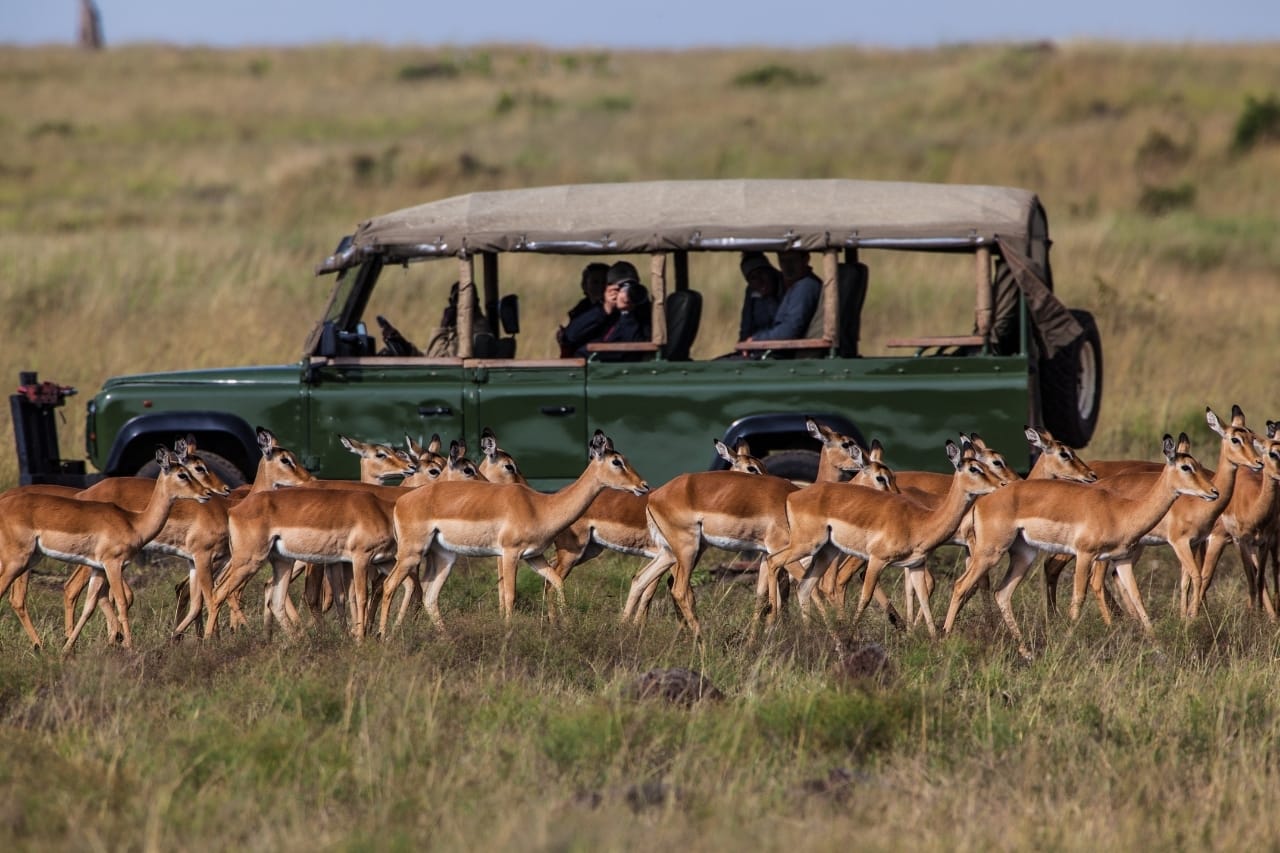

If you dream of dust-lit lions, mirror-still lagoons dotted with lilies, and a Milky Way bright enough to cast shadows, a photographic safari with Infinite Safaris Africa is how you bring that dream home—frame by frame. This is not another list of generic tips. It’s a practical, modern playbook drawn from the realities of African field craft: fast-changing light, skittish subjects, bumpy vehicles, and moments that happen once and never again. Use it to prepare, to choose the right itinerary and gear, to master camera settings that actually work on a moving game viewer, and—most importantly—to tell compelling visual stories that make viewers feel Africa.
Why Africa is Different (and Why That’s Good for Your Photos)
- Light with character. Golden hours are long. Backlit dust turns running hooves into halos. Storm build-ups paint vast skies. Your job is to work the light, not fight it.
- Wildlife that rewards anticipation. Animals in Southern and East Africa have routines—waterhole arrivals, hunting hours, heat-of-day shade—that you and your guide can predict. Preparation wins more than luck.
- Vehicles as tripods. You’ll shoot 80–90% of your images from a vehicle. Stability, fast access, and thoughtful composition from a seated position are far more important than mastering a gimbal on foot.
Choosing the Right Photographic Safari (The Part Most People Skip)
The biggest upgrade to your images isn’t a new lens; it’s the right logistics.
- Seat configuration & vehicle height
Ask for max 6 guests in a 9-seater, with tiered seats and removable doors/side panels in private reserves where allowed. Higher sightlines clear tall grass; fewer elbows mean faster framing. - Dedicated photo support
Beanbags on every seat, clamp-style window mounts available, and a driver trained to kill the engine for every shot. Infinite Safaris Africa outfits vehicles with sand-ready beanbags and will pre-fill them on arrival. - Guide-to-guest ratio
Ideal is 1 guide to 2–4 photographers. It’s the difference between “there’s a leopard” and “we’ll loop to the termite mound for backlight in three minutes.” - Timing the destination
- Botswana (Okavango/Chobe): Dry season (Jun–Oct) shrinks water and concentrates game; Chobe’s photo boats deliver low-angle eye-level shots.
- Namibia (Etosha/Sossusvlei): White pan backgrounds and graphic dunes are best May–Oct.
- South Africa (Kgalagadi/Kruger/private reserves): Year-round, with crisp winter light and summer thunderstorms.
- Zimbabwe & Zambia (Mana Pools/Lower Zambezi): Walking, canoe, and low-angle elephant shots in Aug–Oct.
- Tanzania (Serengeti/Ngorongoro): Migration windows vary; shoulder weeks often mean better light and fewer vehicles.
We build photographic itineraries around light direction, water sources, and animal behaviour, not just bed-nights.
Gear That Works in the Real World
Cameras
- Modern mirrorless bodies excel: silent or quiet shutters, excellent animal/eye AF, and fast burst rates. Pro-level stacked sensors handle action; mid-range bodies with good AF are superb value.
- Two bodies are non-negotiable—dust, speed, and redundancy. Mount a long zoom on one and a mid-range or wide on the other.
Great pairings (mix and match by brand):
- Long: 100–400mm, 200–500/600mm, 150–600mm (flexible, sharp, and packable)
- Mid/Wide: 24–105mm or 24–70mm, plus a 14–30/35mm for night sky and landscapes
- Bird/Action specialists: fast primes (300/2.8, 400/2.8) if weight allows.
Support & Accessories
- Beanbag (empty in transit, filled at camp). It’s faster and steadier in vehicles than tripods.
- Clamp or window mount for fixed hides and slow river cruises.
- Lens rain/dust covers, rocket blower, microfiber cloths, and a soft paintbrush for sand.
- Polariser: useful over water; otherwise remove to keep shutter speeds high.
- Headlamp (red mode), spare batteries, and dual UHS-II/CFexpress cards.
- Travel power: international plug, 12V car charger, power bank (carry-on; never check).
- Audio recorder or your phone’s voice memos for soundscapes—hyenas whooping, thunder, frogs at a pan—your future film will thank you.
What About Smartphones and Drones?
- Phones are now credible tools: shoot RAW/ProRAW, use telephoto modules, lock exposure and focus, and steady on a beanbag.
- Night modes capture Milky Way silhouettes if you brace the phone or use a mini clamp.
- Drones are banned in most parks. Always ask us first; we secure permissions where legal or provide alternatives (heli doors-off flights, elevated hides).
Settings That Survive Bumpy Roads
Real safari settings must tolerate motion—yours and the subject’s—and the fact you may be shooting one-handed while the guide forwards a radio call.
General baseline (wildlife):
- Mode: Manual with Auto ISO
- Aperture: f/5.6–f/8 for groups; f/4–f/5.6 for portraits
- Minimum shutter:
- 1/1000s running antelope or birds
- 1/1600–1/2000s for fast raptors or leaping cats
- 1/320–1/500s calm portraits
- ISO ceiling: Set a realistic cap (ISO 6400 or 12 800 on newer bodies). Grain beats blur—and can be denoised later.
- AF: Continuous (AF-C/AI-Servo) + animal/eye detection; back-button focus (AF-ON).
- Burst mode: Medium-high; avoid “spray and pray,” but catch the in-between gestures.
- Metering & compensation: Use evaluative/matrix and ride Exposure Compensation (+0.3 to +1.3) to protect backlit fur and dust.
- Stabilisation: Leave IBIS/VR/IS on unless panning fast; keep elbows braced on the vehicle.
- Silent shutter caution: Rolling-shutter can bend birds’ wings on some bodies; prefer electronic-first curtain or mechanical for fast pans.
Low light & night drives
- Open to f/2.8–f/4, minimum shutter 1/250s for slow movement, Auto ISO uncapped if your camera tolerates it. Shoot RAW, accept grain, and harvest mood.
Video
- 4K 24/30p for general scenes, 4K60 for action. Shutter ≈ 1/(double frame rate), log profile if you grade, otherwise a standard profile and stable white balance for simplicity.
Field Craft: How to Work a Sighting Like a Pro
- Arrive early, stay late. Better to wait 25 minutes at a waterhole than miss a five-second explosion of action.
- Position with purpose. Move for light and angle, not just proximity. A backlit dust cloud at 30 metres often beats a nose-to-lens shot.
- Engine off, hands still. Ask your driver to cut the motor. Brace camera on beanbag; let the scene settle.
- Compose beyond the portrait.
- Include habitat (quiver trees, red dunes, riverine forest).
- Shoot sequences: establishing shot → behaviour → detail (paw, horn, eye) → exit.
- Use negative space for tension; leave room in front of a moving subject.
- Watch the wind. Predators approach upwind; dust streams are predictable. Park accordingly for backlight and clean backgrounds.
- Photograph behaviour, not just animals. Nursing, sparring, grooming, scanning on termite mounds—behaviour tells story.
- Respect & ethics. No bait, no playback, no crowding. If the animal changes behaviour because of you, you’re too close. We build distance into our plans and let shots come to us.
A Seven-Day Shot List (That Builds a Narrative)
- Day 1: Camp life and landscape—sunrise silhouettes, details (hands, wheels, maps), stars over your chalet.
- Day 2: “Movement” theme—panning wildebeest, dust trails, starlings in murmuration.
- Day 3: “At water” theme—reflections, crocodile textures, oxpeckers.
- Day 4: Predators at rest—tight eyes, whiskers, paws; then a wide environmental portrait.
- Day 5: Birds—low-angle from a boat or hide; behavioural series (preen, stretch, flight).
- Day 6: People—the guide’s hands on the wheel, tracker’s scan on the bonnet seat, campfire portraits.
- Day 7: Story wrap—closing landscape in different weather, a final portrait, and a clean logo shot for your album cover.
Destination Ideas by Country (All Routable with Infinite Safaris Africa)
- South Africa – From Kgalagadi’s red dunes and backlit sandstorms to private reserves in Greater Kruger for dependable predator action; add Cape seascapes or Drakensberg skylines.
- Botswana – Okavango channels for low-angle mokoro scenes; Chobe photo boats for frame-filling elephants at eye level; Central Kalahari for big skies and dust.
- Namibia – Graphic dunes at Sossusvlei, eerie camelthorn silhouettes in Deadvlei, salt-white Etosha pans for high-key wildlife.
- Zimbabwe & Zambia – Mana Pools’ blue forests for on-foot elephant portraits; Lower Zambezi’s boat-to-bank variety; Victoria Falls mistbows.
- Tanzania – Serengeti migration crossings, kopje-top lions, crater-rim clouds in Ngorongoro; add Zanzibar for culture and coastal abstracts.
- Mozambique – Bazaruto for dhows at sundown and Indian Ocean blues to diversify a wildlife portfolio.
We design combinations that maximise light variety—not just checklists.
Packing to Win (and Keep Dust Out)
- Carry-on both bodies and lenses; use a soft roll-top duffel for clothes.
- Beanbag empty in transit; we supply clean fill at camp.
- Neutral clothing (greens/khaki/earth), brimmed hat, thin gloves for morning wind-chill.
- Documentation: serial numbers list; proof of ownership for customs; travel insurance that covers camera gear.
- Hygiene for optics: blower > brush > microfiber; avoid lens swaps in wind; face the mount down; keep a spare body capped for emergency.
Workflow That Protects Your Shots
- Cull lightly in-field (stars/colour labels). Don’t overspend laptop time—rested eyes make better photos tomorrow.
- Back up 3-2-1: to laptop + external SSD each day; cloud when connectivity allows.
- Denoise last (Lightroom/Topaz) after base exposure/colour work.
- Deliverables for yourself: one hero image daily + one 5-image story; your future album builds itself.
The Creative Edge: Make Pictures Only You Can Make
- Dust silhouettes. Position for backlight and under-expose by 1 stop; keep shutter fast enough to freeze form, not the dust.
- Reflections & ripples. Boat engines off; aim for mirror-still water just after sunrise before thermals rise.
- Foreground storytelling. Frame through acacia thorns or hide slits; it suggests being there.
- Black-and-white big skies. Namibia and the Highveld love monochrome—watch cloud structure.
- Sound + stills. Record 10-second soundscapes of scenes for multimedia posts later.
- Night silhouettes. Place animals or trees against the Milky Way (dry-season clarity), 15–20s at f/1.8–f/2.8, ISO 3200–6400 on a small tripod or rock. Phones can try astrophotography mode if braced.
Travel With Us: What Infinite Safaris Africa Adds for Photographers
- Vehicle set-up with beanbags, window clamps on request, and seating planned for sightlines.
- Photo-aware guiding—engine-off discipline, positioning for light, not crowds.
- Custom hides (including new bow-hunting hides on our Loskop property adapted for photographers) and private sessions where legal.
- Flexible schedules to chase weather and behaviour, with blue-hour departures and late returns.
- Country coverage you can stitch into an image-led journey: South Africa, Botswana, Namibia, Zimbabwe, Zambia, Mozambique and Tanzania.
Bring your eye; we’ll supply the access, timing and field craft that help your images sing.
Frequently Asked (Smart) Questions
Is a 70–200mm enough?
It’s brilliant for portraits in private reserves but short in open country. Pair it with a 100–400/200–600 or a 1.4× teleconverter.
Do I need f/2.8 glass?
Nice to have for crepuscular predators and stars, but modern sensors + denoise make f/4–f/6.3 zooms entirely viable and far lighter.
Can I bring a tripod?
Yes, for landscapes/night sky at camp. In vehicles, a beanbag is faster and steadier.
What about charging?
Most lodges offer 220V power; some drives provide 12V in-vehicle charging. Bring a universal adapter and a power bank.
Will I get “the shot”?
No outfitter can promise behaviour. We promise time, positioning, and a plan—the three things that genuinely increase your odds.
Your Next Step
Tell us the images you want—dust-lit lions, birds lifting from papyrus, low-angle elephant river crossings—and we’ll design a photographic safari that stacks the deck in your favour. From the Kalahari’s copper light to the Serengeti’s storm horizons, Infinite Safaris Africa builds trips that turn moments into portfolios.
Ready to design your photo safari? Speak to our team and let’s map the light.
